

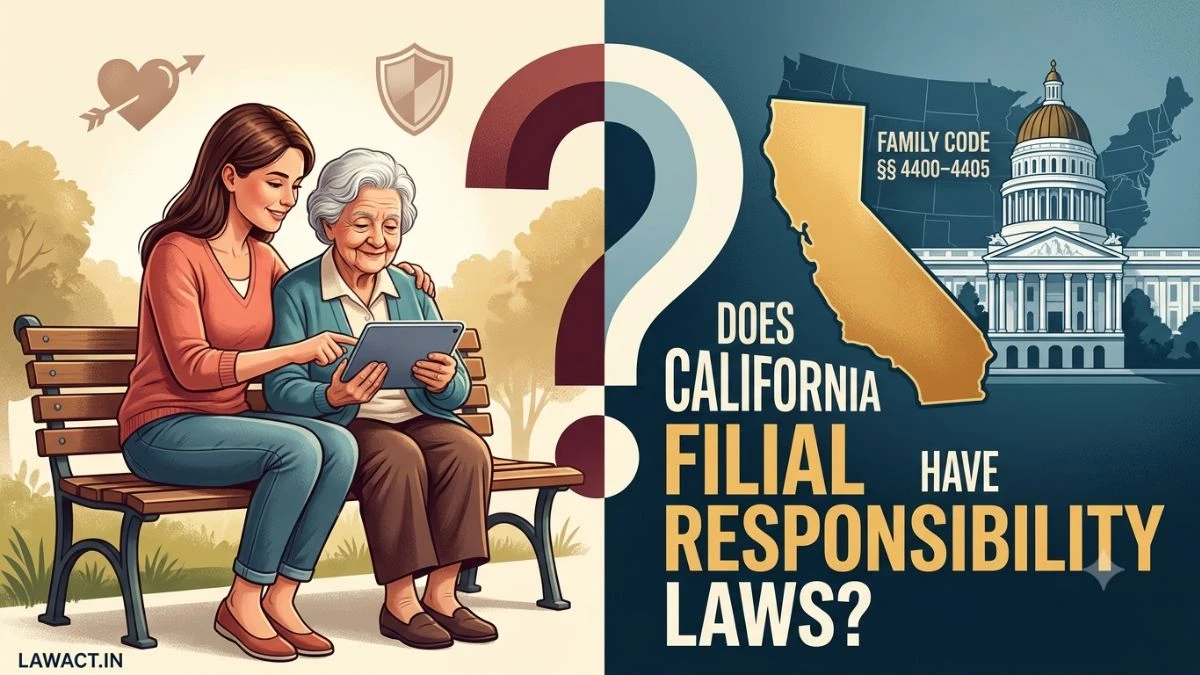
Yes. California has laws that can require an adult child to financially support a parent who is in need and unable to support themselves through work. The primary statute is California Family Code § 4400.
However, this does not mean that every adult child must automatically pay a parent’s bills. The law applies only when specific conditions are met, including the parent’s need and the adult child’s ability to provide support.
California’s filial responsibility rules can become relevant when an aging, disabled, or financially dependent parent cannot meet basic living expenses.
What Is a Filial Responsibility Law?
A filial responsibility law is a law that may require an adult child to provide financial support for a parent who cannot adequately support themselves.
These laws are different from ordinary family support arrangements because they can create a legal obligation under state law.
California’s rules concerning support of parents are found primarily in Family Code §§ 4400–4413.
What Does California Family Code § 4400 Say?
California Family Code § 4400 provides that, unless another law applies, an adult child must support a parent who:
- Is in need; and
- Is unable to support themselves through work.
The obligation exists only to the extent of the adult child’s ability to provide support.
In simple terms, California law does not make an adult child automatically responsible for all of a parent’s expenses. The parent’s financial need and the child’s ability to help are important parts of the analysis.
When Can an Adult Child Be Required to Support a Parent?
A support obligation may arise when a parent is financially unable to maintain themselves and the adult child has the ability to provide assistance.
Depending on the circumstances, support may involve necessities such as:
| Type of support | Examples |
|---|---|
| Food | Groceries and basic meals |
| Housing | Shelter or necessary housing expenses |
| Clothing | Basic clothing and personal necessities |
| Medical care | Necessary medical attendance or care |
| Daily necessities | Other essential living expenses |
The exact amount and type of support depend on the circumstances of the case.
Does an Adult Child Have to Pay All of a Parent’s Bills?
No.
California law does not automatically require an adult child to pay every expense incurred by a parent.
Family Code § 4400 limits the duty according to the adult child’s ability to provide support.
For example, a court would not simply assume that an adult child with limited income can pay unlimited medical, housing, or living expenses for a parent.
The financial circumstances of both the parent and adult child can be important when determining whether support should be ordered.
What Factors Can Affect a California Filial Support Case?
Several circumstances may be relevant, including:
- The parent’s financial need
- Whether the parent can support themselves through work
- The adult child’s income
- The adult child’s assets and resources
- The adult child’s existing financial obligations
- The amount of support that is reasonably necessary
- The circumstances of both the parent and adult child
The central statutory limitation is that the adult child’s obligation is tied to their ability to provide support.
Can a Parent Sue an Adult Child for Support in California?
Yes, in certain circumstances.
California Family Code § 4403 provides a mechanism for enforcing the duty of support. The statute allows a parent, or a county acting on behalf of the parent, to bring an action against an adult child to enforce the support obligation.
This means the law is more than a general moral expectation. Under the circumstances specified by California law, it can create an enforceable legal duty.
Does California Penal Code § 270c Apply to Support of Parents?
Potentially, yes.
California Penal Code § 270c states that, subject to specified Family Code provisions, an adult child who has the ability to do so but fails to provide necessary food, clothing, shelter, or medical attendance for an indigent parent may be guilty of a misdemeanor.
This provision is important because California’s law concerning support of parents is not limited to civil support obligations.
However, whether Penal Code § 270c applies in a particular situation depends on the facts and the applicable statutory exceptions.
Is California’s Filial Responsibility Law Commonly Enforced?
California’s statutory duty exists, but that does not mean that adult children are routinely taken to court whenever a parent has financial difficulties.
Whether a case is brought and what remedy may be available depends on the specific circumstances, including the parent’s need, the child’s ability to provide support, and the other requirements of California law.
Therefore, it is better to say that California has an enforceable statutory framework for support of needy parents, rather than simply saying that the law is “never enforced.”
Does California Require Children to Pay a Parent’s Nursing Home Bills?
Not automatically.
A parent’s nursing home, medical, or long-term-care expenses do not automatically become the financial responsibility of an adult child merely because the parent cannot pay them.
However, California’s statutes concerning support of parents may become relevant when a parent is in need and unable to support themselves and the adult child has the ability to provide support.
Long-term-care situations can involve additional laws, contracts, public benefits, and financial rules, so the specific facts matter.
Does the Child’s Financial Situation Matter?
Yes.
This is one of the most important points under California Family Code § 4400.
The statute states that the adult child’s duty exists only to the extent of the adult child’s ability to provide support.
Therefore, the financial resources and obligations of the adult child can be highly relevant.
Is Filial Responsibility the Same in Every State?
No.
Filial responsibility laws vary significantly from state to state.
Some states have statutes addressing an adult child’s responsibility for a parent’s support, while other states have different rules or limited circumstances in which such obligations may arise.
For this reason, information about filial responsibility laws in another state should not automatically be applied to California.
California Filial Responsibility Law: Key Takeaways
Here are the most important points:
- Yes, California has laws concerning adult-child support of needy parents.
- California Family Code § 4400 is the primary provision.
- The parent must be in need and unable to support themselves by work.
- The adult child’s duty is limited by the child’s ability to provide support.
- California Family Code § 4403 provides a way to enforce the support obligation.
- California Penal Code § 270c addresses failure by an able adult child to provide certain necessities to an indigent parent, subject to the statutory provisions and exceptions.
- A parent’s medical, housing, or long-term-care expenses do not automatically become the child’s responsibility.
- The specific facts of each case matter.
California Filial Responsibility Laws — Quick Answer
Does California have filial responsibility laws?
Yes. California law can require an adult child to support a parent who is in need and unable to support themselves through work, but the obligation is limited by the adult child’s ability to provide support. California Family Code § 4400 is the principal statute addressing this duty.
Can a parent sue an adult child for support in California?
Yes. California Family Code § 4403 provides for an action to enforce the statutory duty of support in qualifying circumstances.
Does an adult child automatically have to pay a parent’s nursing home bills?
No. California does not automatically make an adult child responsible for every nursing home or medical bill. The applicable support laws and the facts of the situation must be considered.
Can an adult child be criminally liable for failing to support an indigent parent?
California Penal Code § 270c provides that an adult child who has the ability to do so but fails to provide specified necessities to an indigent parent may be guilty of a misdemeanor, subject to the statute and applicable Family Code provisions.
Relevant California Laws
California Family Code § 4400
This is the principal California statute establishing an adult child’s duty to support a parent who is in need and unable to self-maintain by work, subject to the adult child’s ability to provide support.
California Family Code § 4403
This provision addresses enforcement of the duty of support and allows an action against an adult child in qualifying circumstances.
California Penal Code § 270c
This statute addresses an adult child’s failure to provide necessary food, clothing, shelter, or medical attendance to an indigent parent when the child has the ability to do so, subject to the statutory provisions.
Frequently Asked Questions
What is filial responsibility in California?
Filial responsibility refers to a legal duty that may require an adult child to provide support for a parent who is unable to support themselves. California Family Code § 4400 establishes such a duty under specified circumstances.
Does California make adult children responsible for their parents?
California law can make an adult child responsible for supporting a parent who is in need and unable to support themselves by work, but the obligation is limited by the child’s ability to provide support.
Can a parent force an adult child to provide financial support?
A parent may have a legal mechanism to enforce the statutory support duty under California Family Code § 4403 when the requirements of the law are satisfied.
Does California filial responsibility include medical expenses?
Potentially. California law refers to necessary support and Penal Code § 270c specifically mentions medical attendance. Whether particular medical or long-term-care expenses fall within an enforceable obligation depends on the circumstances and applicable law.
What if the adult child cannot afford to support the parent?
The adult child’s ability to provide support is an important limitation under Family Code § 4400. The law does not impose an unlimited financial obligation regardless of the child’s financial circumstances.
Are filial responsibility laws federal laws?
No. Filial responsibility rules are primarily a matter of state law. California’s requirements are established by California statutes.
Conclusion
California does have filial responsibility laws. Under California Family Code § 4400, an adult child may have a legal duty to support a parent who is in need and unable to support themselves through work, but only to the extent of the child’s ability to provide support.
California law also provides enforcement mechanisms, and Penal Code § 270c addresses certain failures to provide necessities to an indigent parent.
The important point is that an adult child is not automatically responsible for every expense of a parent. The parent’s need, the child’s ability to provide support, and the specific facts of the situation can all matter.
If you are involved in a dispute concerning parental support, medical expenses, or long-term-care costs, consider consulting a California attorney who can evaluate the specific circumstances and current law.
Sources & References
Explore Question Categories

Founder & Publisher, Law Act
Prabh Kalsi is the founder and publisher of Law Act. He manages the website’s content research, organization, editing, and publishing. Law Act’s legal content is developed using publicly available legislation, government resources, official publications, and other authoritative sources. The website provides general legal information for educational and informational purposes and does not provide personalized legal advice.