
A cover letter is a personal document that you send along with your resume when applying for a job. It explains who you are, why you are interested in the position, and why you are the right person for the job. Unlike a resume, which lists your skills and work history in a structured format, a cover letter allows you to speak directly to the hiring manager in a more natural and detailed way. It gives you the chance to highlight your strengths, share relevant achievements, and show your enthusiasm for the company. A well-written cover letter helps you make a strong first impression and increases your chances of getting an interview.
What Are Cover Letter Templates?
Cover letter templates are pre-designed layouts that allow you to create a cover letter without starting from scratch. These templates already include the structure, basic sections, and formatting you need. All you have to do is fill in your own information.
These templates are usually offered in formats like Word, PDF, or Google Docs. They make the process easier because the layout is already organized. You just replace the sample text with your own details. Many job seekers prefer using these templates because they save time, reduce stress, and ensure the letter looks clean and professional.
How to Write a Cover Letter?
A cover letter is a short document that you send with your resume when applying for a job. It explains who you are, why you want the job, and why you are a good fit for the position. Writing a cover letter may feel confusing at first, but when you follow the right steps, it becomes very simple.
Below is a complete beginner-friendly guide that shows exactly how to write a good cover letter.
1. Start with a Simple Header
Your header should include basic contact details. This goes at the top of the letter.
Include:
- Your full name
- Phone number
- Email address
- City and State
- Date
- Employer’s name
- Company name
Example:
John Miller
Chicago, IL
johnmiller@email.com
555-555-5555
March 10, 2025
2. Write a Professional Greeting
Use a polite greeting. If you know the hiring manager’s name, use it.
Examples:
- Dear Hiring Manager
- Dear Mr. Johnson
- Dear Ms. Parker
Avoid using greetings like “To whom it may concern,” because it sounds too formal and outdated.
3. Write a Strong Opening Paragraph
Your first paragraph should make a good first impression. It should explain who you are and why you are writing.
Example:
“I am excited to apply for the Marketing Assistant position at ABC Company. I have strong communication skills, hands-on marketing experience, and a passion for growing brands. I believe I can contribute to your team and add real value.”
This introduction is simple, clear, and direct.
4. Add a Middle Paragraph Showing Your Skills
This is the most important part of the cover letter. Here, you explain:
- Your skills
- Your experience
- How your work has helped others
- Why you are a strong fit for the job
Use short, clear paragraphs. Give one or two real-life examples.
Example:
“In my previous role at XYZ Agency, I supported social media campaigns, wrote content, and assisted with client communication. I helped increase online engagement by 40 percent within three months. My experience taught me how to manage multiple projects and meet deadlines effectively.”
5. Add Another Paragraph Showing Why You Want This Company
Employers like to see that you understand their company and truly want to work there.
Example:
“I admire ABC Company for its focus on creativity and customer satisfaction. I follow your recent campaigns and appreciate how your team builds meaningful connections with customers. I would be proud to contribute to your mission and continue delivering high-quality work.”
This paragraph shows interest and research.
6. Write a Polite Closing Paragraph
End your letter with a short, positive, and professional closing.
Example:
“Thank you for taking the time to review my application. I would welcome the opportunity to discuss how my skills and experience can support your team. I look forward to hearing from you.”
7. Finish With a Professional Sign-Off
Examples:
- Sincerely
- Best regards
- Respectfully
Then add your full name.
Example:
Sincerely,
John Miller
Structure of a Perfect Cover Letter (Table)
| Section | Purpose | Example |
|---|---|---|
| Header | Shows your contact details | Name, email, phone, city |
| Greeting | Professional opening | Dear Hiring Manager |
| Opening Paragraph | Introduces you | I am excited to apply… |
| Middle Paragraph | Shows skills & examples | I increased engagement… |
| Company Paragraph | Shows interest in company | I admire your work… |
| Closing Paragraph | Ends politely | Thank you for your time… |
| Signature | Professional end | Sincerely, John Miller |
Cover Letter Template
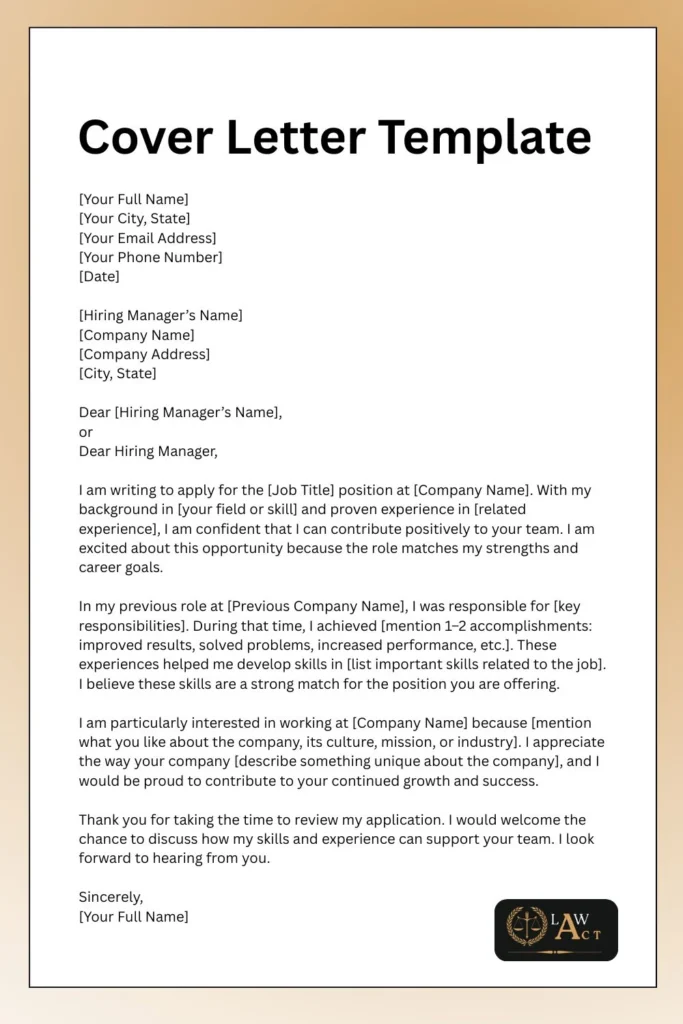
[Your Full Name]
[Your City, State]
[Your Email Address]
[Your Phone Number]
[Date]
[Hiring Manager’s Name]
[Company Name]
[Company Address]
[City, State]
Dear [Hiring Manager’s Name],
or
Dear Hiring Manager,
I am writing to apply for the [Job Title] position at [Company Name]. With my background in [your field or skill] and proven experience in [related experience], I am confident that I can contribute positively to your team. I am excited about this opportunity because the role matches my strengths and career goals.
In my previous role at [Previous Company Name], I was responsible for [key responsibilities]. During that time, I achieved [mention 1–2 accomplishments: improved results, solved problems, increased performance, etc.]. These experiences helped me develop skills in [list important skills related to the job]. I believe these skills are a strong match for the position you are offering.
I am particularly interested in working at [Company Name] because [mention what you like about the company, its culture, mission, or industry]. I appreciate the way your company [describe something unique about the company], and I would be proud to contribute to your continued growth and success.
Thank you for taking the time to review my application. I would welcome the chance to discuss how my skills and experience can support your team. I look forward to hearing from you.
Sincerely,
[Your Full Name]
Different Types of Cover Letter Examples
There are several types of cover letters, and each one is used for a specific purpose.
Application Cover Letter
This is the most common type. You send it when applying for a specific job that is currently open. It explains your skills, experience, and why you are the right fit. Almost every job application requires this type of cover letter.
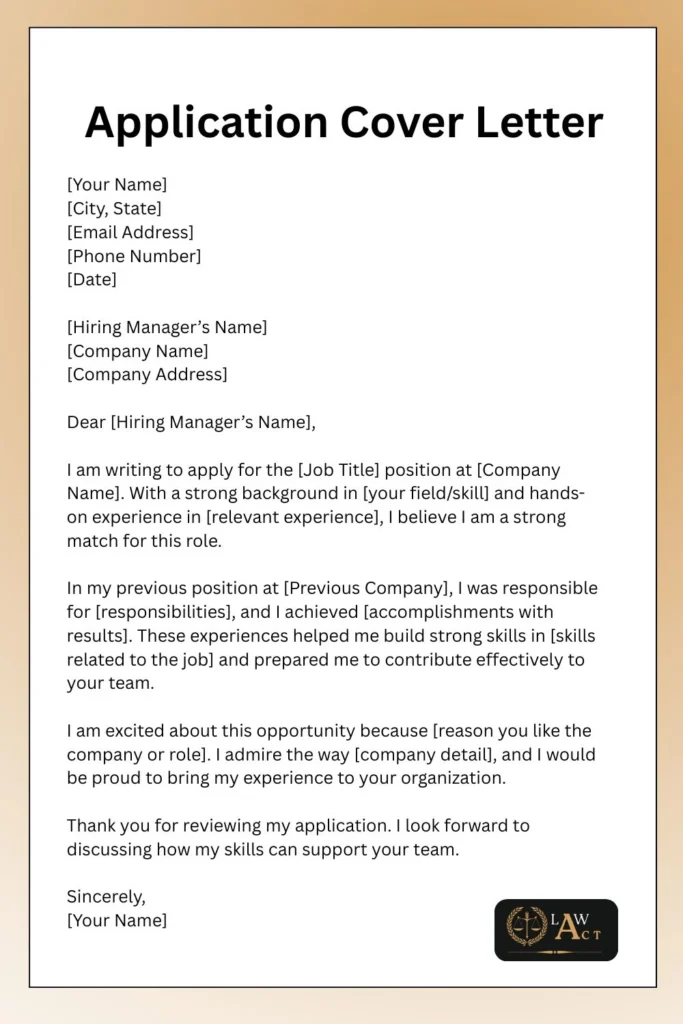
[Your Name]
[City, State]
[Email Address]
[Phone Number]
[Date]
[Hiring Manager’s Name]
[Company Name]
[Company Address]
Dear [Hiring Manager’s Name],
I am writing to apply for the [Job Title] position at [Company Name]. With a strong background in [your field/skill] and hands-on experience in [relevant experience], I believe I am a strong match for this role.
In my previous position at [Previous Company], I was responsible for [responsibilities], and I achieved [accomplishments with results]. These experiences helped me build strong skills in [skills related to the job] and prepared me to contribute effectively to your team.
I am excited about this opportunity because [reason you like the company or role]. I admire the way [company detail], and I would be proud to bring my experience to your organization.
Thank you for reviewing my application. I look forward to discussing how my skills can support your team.
Sincerely,
[Your Name]
Referral Cover Letter
This type is used when someone inside the company referred you. You mention the name of the person who recommended you for the job. Referral cover letters are powerful because employers trust internal recommendations. It increases your chance of getting noticed faster.
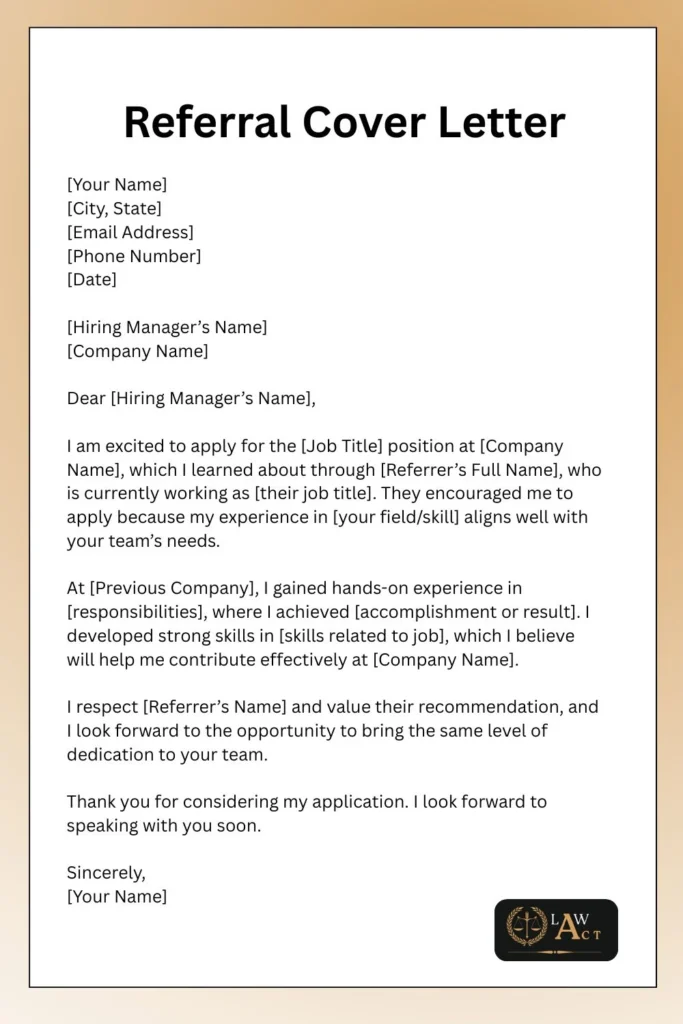
[Your Name]
[City, State]
[Email Address]
[Phone Number]
[Date]
[Hiring Manager’s Name]
[Company Name]
Dear [Hiring Manager’s Name],
I am excited to apply for the [Job Title] position at [Company Name], which I learned about through [Referrer’s Full Name], who is currently working as [their job title]. They encouraged me to apply because my experience in [your field/skill] aligns well with your team’s needs.
At [Previous Company], I gained hands-on experience in [responsibilities], where I achieved [accomplishment or result]. I developed strong skills in [skills related to job], which I believe will help me contribute effectively at [Company Name].
I respect [Referrer’s Name] and value their recommendation, and I look forward to the opportunity to bring the same level of dedication to your team.
Thank you for considering my application. I look forward to speaking with you soon.
Sincerely,
[Your Name]
Prospecting Cover Letter (Letter of Interest)
This letter is used when there is no job posting. You send it to ask if the company has any open positions that match your skills. It shows interest in the company even when they are not hiring. This type is useful for building opportunities before jobs are posted.
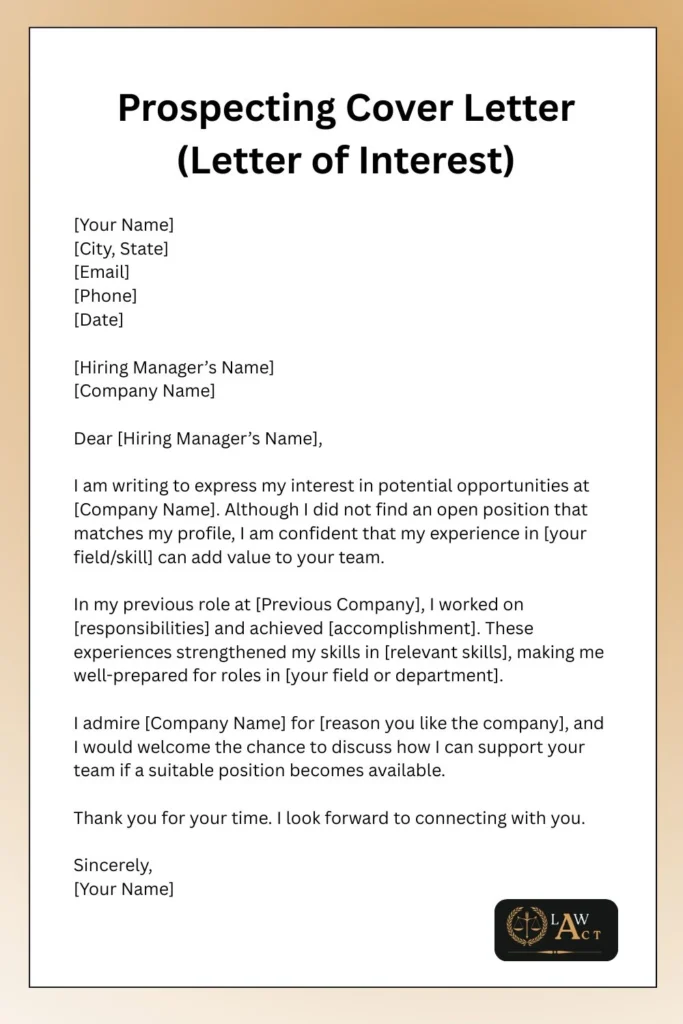
[Your Name]
[City, State]
[Email]
[Phone]
[Date]
[Hiring Manager’s Name]
[Company Name]
Dear [Hiring Manager’s Name],
I am writing to express my interest in potential opportunities at [Company Name]. Although I did not find an open position that matches my profile, I am confident that my experience in [your field/skill] can add value to your team.
In my previous role at [Previous Company], I worked on [responsibilities] and achieved [accomplishment]. These experiences strengthened my skills in [relevant skills], making me well-prepared for roles in [your field or department].
I admire [Company Name] for [reason you like the company], and I would welcome the chance to discuss how I can support your team if a suitable position becomes available.
Thank you for your time. I look forward to connecting with you.
Sincerely,
[Your Name]
Networking Cover Letter
This is sent to people in your professional network. You send it to ask for job leads, advice, or introductions. It’s not a direct job application but a way to expand opportunities through connections. It helps you grow your network and find hidden job openings.
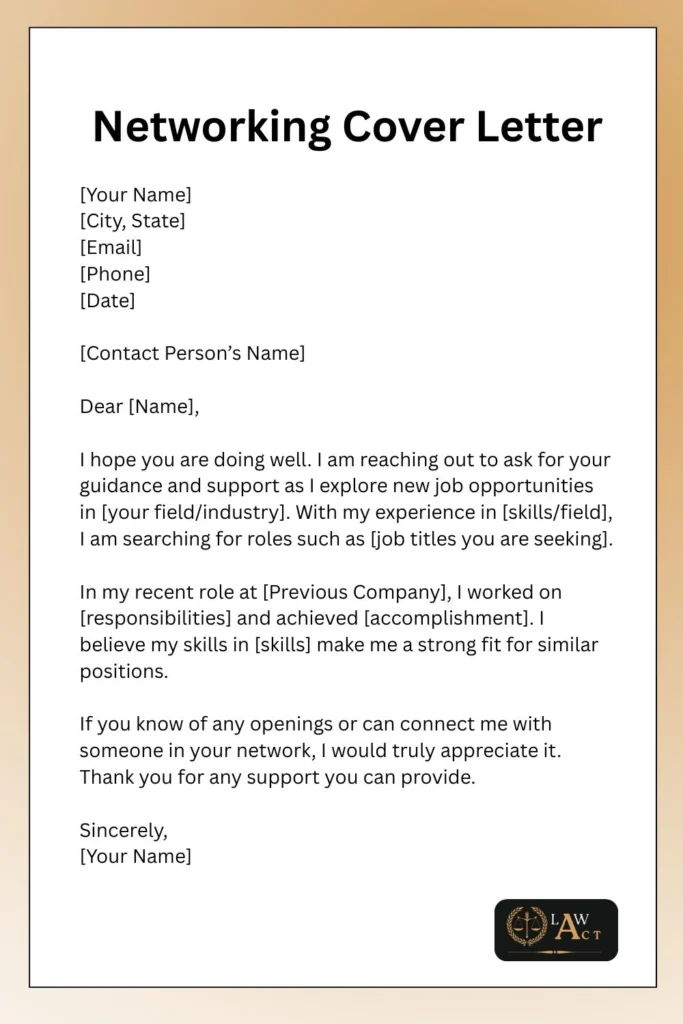
[Your Name]
[City, State]
[Email]
[Phone]
[Date]
[Contact Person’s Name]
Dear [Name],
I hope you are doing well. I am reaching out to ask for your guidance and support as I explore new job opportunities in [your field/industry]. With my experience in [skills/field], I am searching for roles such as [job titles you are seeking].
In my recent role at [Previous Company], I worked on [responsibilities] and achieved [accomplishment]. I believe my skills in [skills] make me a strong fit for similar positions.
If you know of any openings or can connect me with someone in your network, I would truly appreciate it. Thank you for any support you can provide.
Sincerely,
[Your Name]
Email Cover Letter
This is a short, simple cover letter written directly inside an email. It is used when companies ask for a brief email instead of a formal attachment. Email cover letters are more casual but still professional. Used when you submit resumes through email instead of online portals.
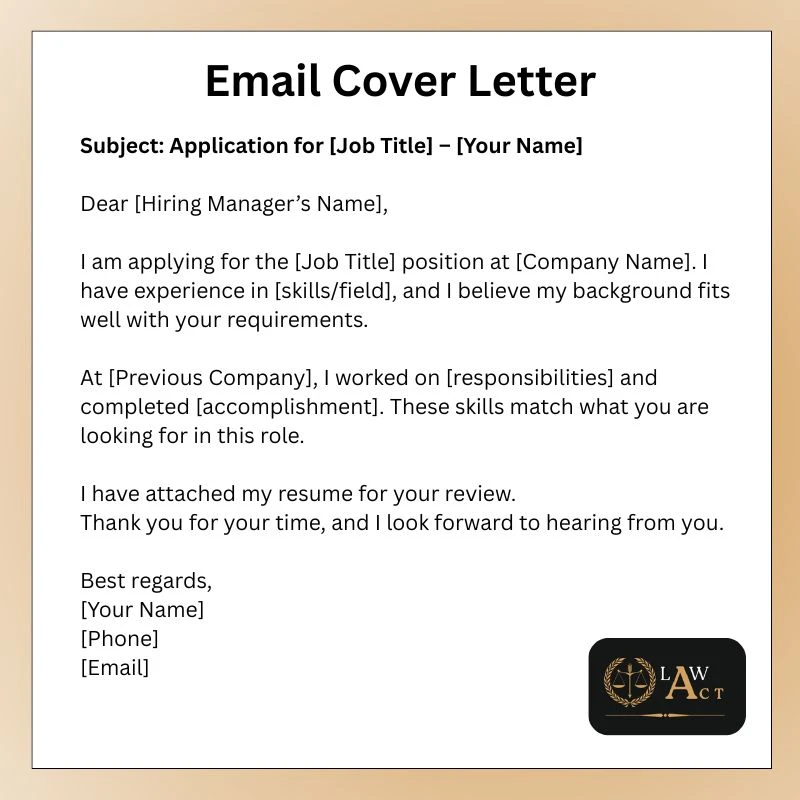
Subject: Application for [Job Title] – [Your Name]
Dear [Hiring Manager’s Name],
I am applying for the [Job Title] position at [Company Name]. I have experience in [skills/field], and I believe my background fits well with your requirements.
At [Previous Company], I worked on [responsibilities] and completed [accomplishment]. These skills match what you are looking for in this role.
I have attached my resume for your review.
Thank you for your time, and I look forward to hearing from you.
Best regards,
[Your Name]
[Phone]
[Email]
Career Change Cover Letter
This is used when you are switching careers or industries. It explains why you are changing fields and what transferable skills you have. This letter highlights your motivation and strengths even if your past experience is different. It helps employers understand why you are a good match for a new direction.
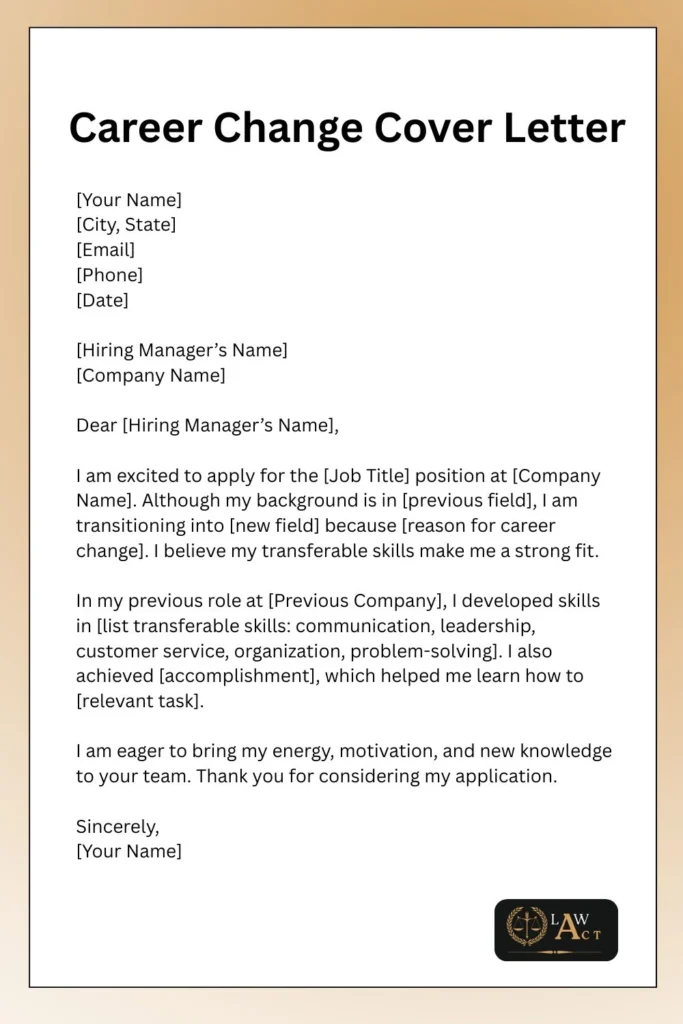
[Your Name]
[City, State]
[Email]
[Phone]
[Date]
[Hiring Manager’s Name]
[Company Name]
Dear [Hiring Manager’s Name],
I am excited to apply for the [Job Title] position at [Company Name]. Although my background is in [previous field], I am transitioning into [new field] because [reason for career change]. I believe my transferable skills make me a strong fit.
In my previous role at [Previous Company], I developed skills in [list transferable skills: communication, leadership, customer service, organization, problem-solving]. I also achieved [accomplishment], which helped me learn how to [relevant task].
I am eager to bring my energy, motivation, and new knowledge to your team. Thank you for considering my application.
Sincerely,
[Your Name]
Re-application Cover Letter
This is used when re-applying to the same company or same role at a later time. You explain how your skills have improved and why you are applying again. It shows commitment and professional growth.
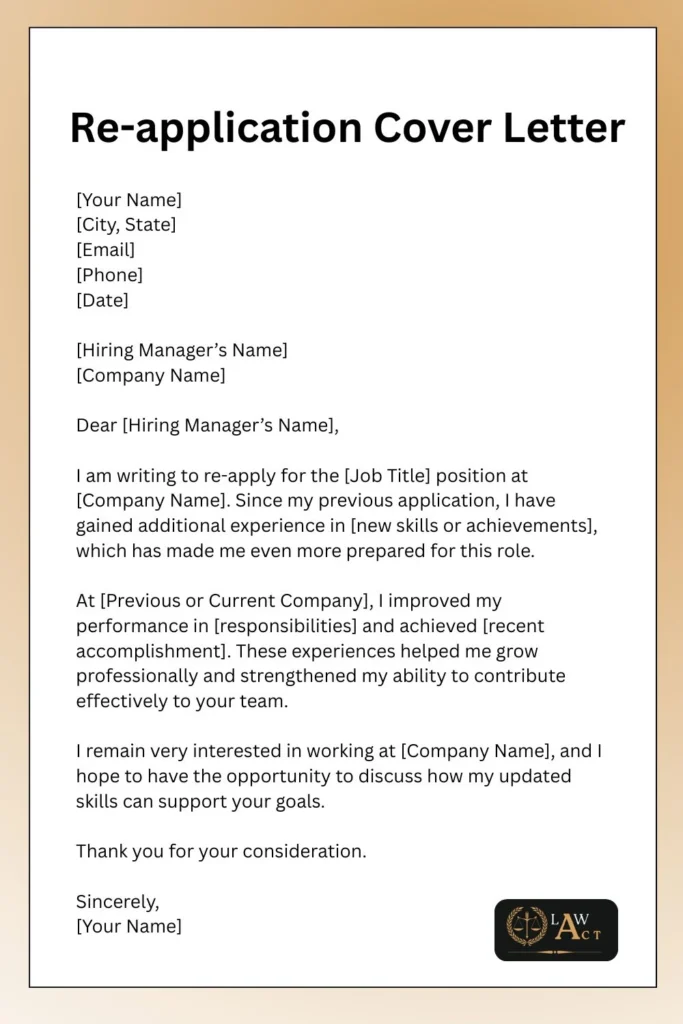
[Your Name]
[City, State]
[Email]
[Phone]
[Date]
[Hiring Manager’s Name]
[Company Name]
Dear [Hiring Manager’s Name],
I am writing to re-apply for the [Job Title] position at [Company Name]. Since my previous application, I have gained additional experience in [new skills or achievements], which has made me even more prepared for this role.
At [Previous or Current Company], I improved my performance in [responsibilities] and achieved [recent accomplishment]. These experiences helped me grow professionally and strengthened my ability to contribute effectively to your team.
I remain very interested in working at [Company Name], and I hope to have the opportunity to discuss how my updated skills can support your goals.
Thank you for your consideration.
Sincerely,
[Your Name]
Internal Position Cover Letter
This letter is used when applying for a job within your current company. It highlights your achievements, company knowledge, and internal experience. Internal cover letters help you move up without leaving the company.
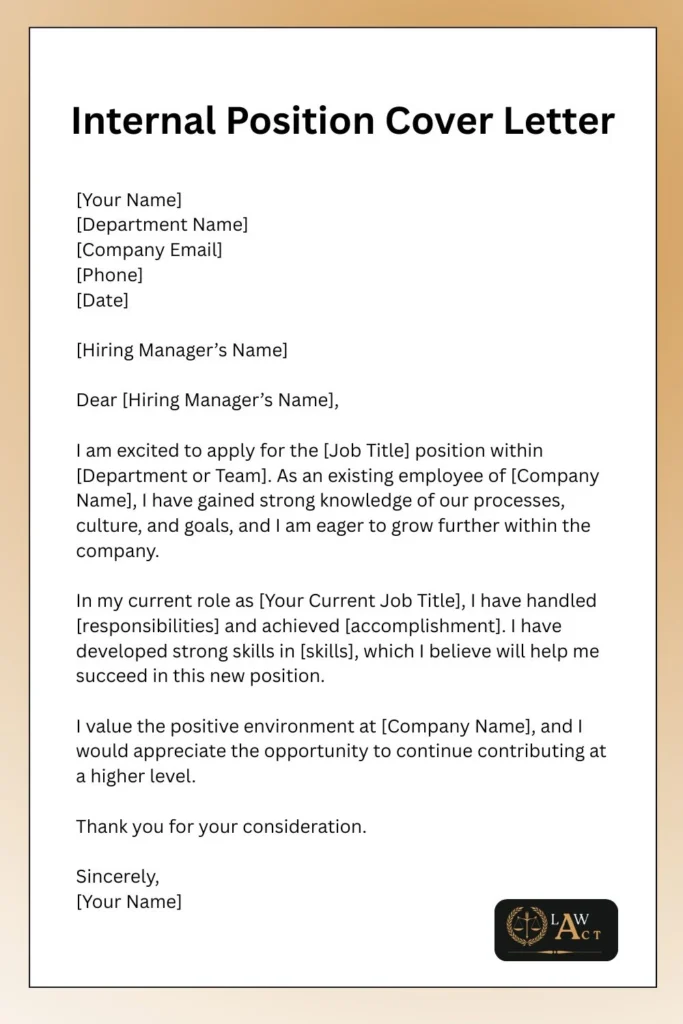
[Your Name]
[Department Name]
[Company Email]
[Phone]
[Date]
[Hiring Manager’s Name]
Dear [Hiring Manager’s Name],
I am excited to apply for the [Job Title] position within [Department or Team]. As an existing employee of [Company Name], I have gained strong knowledge of our processes, culture, and goals, and I am eager to grow further within the company.
In my current role as [Your Current Job Title], I have handled [responsibilities] and achieved [accomplishment]. I have developed strong skills in [skills], which I believe will help me succeed in this new position.
I value the positive environment at [Company Name], and I would appreciate the opportunity to continue contributing at a higher level.
Thank you for your consideration.
Sincerely,
[Your Name]
Benefits of Using Cover Letter Templates
Using cover letter templates has many benefits for job seekers. One of the biggest benefits is saving time. Instead of building your cover letter from scratch, you simply fill in your information in a pre-designed structure. This helps you write your letter faster, especially when you need to apply for multiple jobs in a short time. Templates also help you avoid formatting problems, making your letter look clean and consistent.
Another benefit is confidence. Many job seekers feel unsure about how to start or end their cover letter. A template removes the guesswork by giving you a ready framework. You can focus on writing good content without worrying about design or layout. Templates also help you maintain a professional appearance, which is important when applying for jobs that require good communication skills.
Conclusion
Cover letter templates and formats play a very important role in helping job seekers create professional applications. They provide structure, save time, and ensure your letter looks clean and organized. When you follow a proper format or use a well-designed template, your cover letter becomes more effective and easier for hiring managers to read. Using the right format helps you present your strengths clearly and create a strong first impression. With the templates and tips shared in this blog, you can write a better cover letter that increases your chance of getting an interview.
Also Read:
- Different Covering Letter Templates and Formats
- Informal Letter Format for Class 7th
- Different Friendly Letter Format
- Medical Leave Letter Format
- Enquiry Letter Format Examples
Frequently Asked Questions
How to write a cover letter?
A cover letter is written by introducing yourself, explaining why you want the job, and showing how your skills match the position. Start with a professional greeting, add a strong opening paragraph, explain your experience with simple examples, and end with a clear closing statement. Keep your writing polite and focused on the employer’s needs.
What is a cover letter
A cover letter is a short document that goes with your resume when applying for a job. It explains who you are, why you want the job, and how your skills and experience match the employer’s needs. It helps hiring managers understand your personality and interest before reading your resume.
How long should a cover letter be
A cover letter should usually be one page and not more than three or four short paragraphs. Employers prefer a simple and clear letter that gets to the point quickly. A short, focused letter helps them understand your value without reading unnecessary details. One page is the standard and most professional length.
How to end a cover letter
You should end a cover letter with a polite and confident closing line. Thank the employer for their time, express interest in discussing the role, and use a professional closing phrase like “Sincerely,” or “Best regards.” This shows respect, confidence, and professionalism. Then add your name and contact details clearly.
What should a cover letter include
A good cover letter should include a clear introduction, a summary of your skills and experience, reasons you want the job, and why you are a good fit for the company. It should also include your contact information, a greeting, a closing statement, and a professional sign-off. Keep everything simple and easy to read.
What to include in a cover letter
In a cover letter, include your personal introduction, the job position you are applying for, and the main skills that match the role. Add real examples from your past work experience and explain how you can help the company. Finish with a polite closing and your contact information. Keep it short and focused.
Are cover letters necessary
Cover letters are usually necessary because they give employers a first impression of who you are and why you want the job. Even when they are optional, sending one shows effort and professionalism. A cover letter helps you stand out, explains things not shown in your resume, and increases your chances of getting an interview.
What is the purpose of a cover letter
The purpose of a cover letter is to introduce yourself to the employer and show why you are the right person for the job. It highlights your most relevant skills, explains your interest in the company, and encourages the hiring manager to read your resume. It also helps you make a strong first impression.
How to format a cover letter correctly
A cover letter should follow a clean, simple format so employers can read it easily. Use a professional font, add your contact details at the top, write a greeting, and divide your content into short paragraphs. Focus on clarity, spacing, and easy-to-read sentences. End with a polite closing and your name.
What is the best length for a cover letter
The best length for a cover letter is one single page. Employers read many applications, so they prefer short and clear letters. A one-page cover letter helps you share important details without overwhelming the reader. It also shows that you can communicate professionally and keep information organized and easy to understand.

